Quick answer: To market a CPR business, build a website where every course has its own page and a Book Now button, rank those pages for course plus city searches, keep a complete Google Business Profile, sell group and workplace training directly to employers and schools, and email past students before their two year certification expires.
If you’re wondering how to market a CPR business, start with one fact about your students: almost all of them have a deadline. A nurse needs a card renewed before her license audit. A school needs its staff certified before the semester. A new hire needs BLS before day one. Nobody browses CPR classes for fun.
That changes how you should market. You aren’t trying to inspire anyone. You’re trying to be the easiest, most credible option at the exact moment someone searches “CPR class near me this Saturday”. Get that right and most of the other marketing advice out there becomes optional.
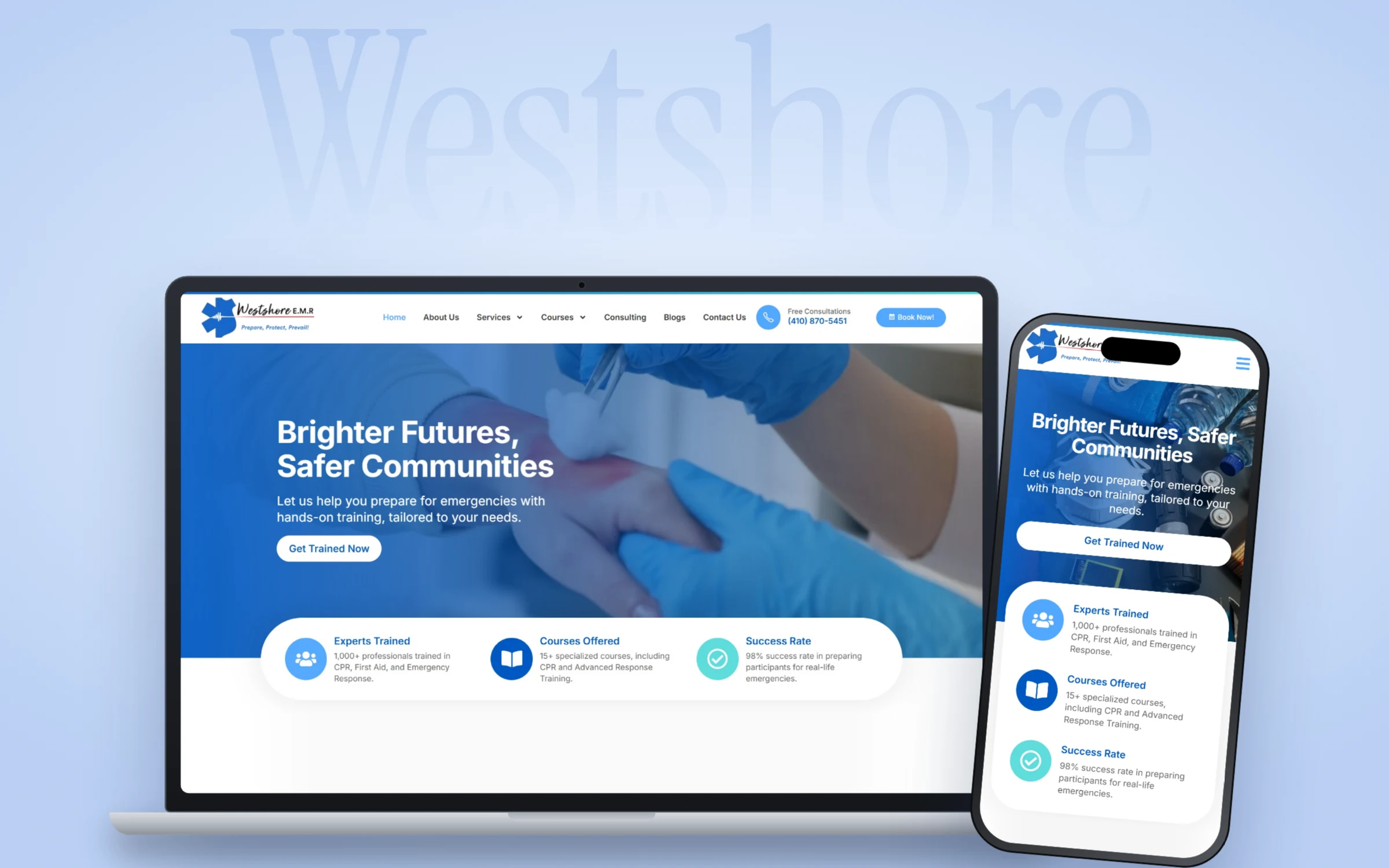
I’ll use Westshore E.M.R., a CPR and first aid training company we built a site for, as the example throughout. You can see the full project in the Westshore E.M.R. case study.
Key takeaways
- Students arrive with deadlines, so speed to booking matters more than clever branding.
- Give every course its own page so Google can match it to specific searches like “BLS class” plus your city.
- Group and workplace training is usually the bigger revenue line, and it needs its own page and its own pitch.
- Certifications typically last two years, which makes recertification reminders your cheapest source of repeat students.
Why most CPR training marketing misses
Read the top results for CPR training business marketing and you get the same generic list: post on social media, hand out flyers, network locally. Fine advice for a bakery. It ignores what is different about training.
Two things are different. First, the buyer is often not the student. An HR manager, a school nurse or a daycare director books ten or twenty seats at once. Second, the need repeats on a fixed schedule. The American Red Cross notes that certifications like CPR/AED and First Aid last two years. Every student you train this month is a likely customer again in 24 months, if you stay in touch.
So your marketing has two engines. One catches individuals searching right now. The other sells group training and brings past students back. The website sits in the middle of both.
Build a CPR training website that books, not just informs
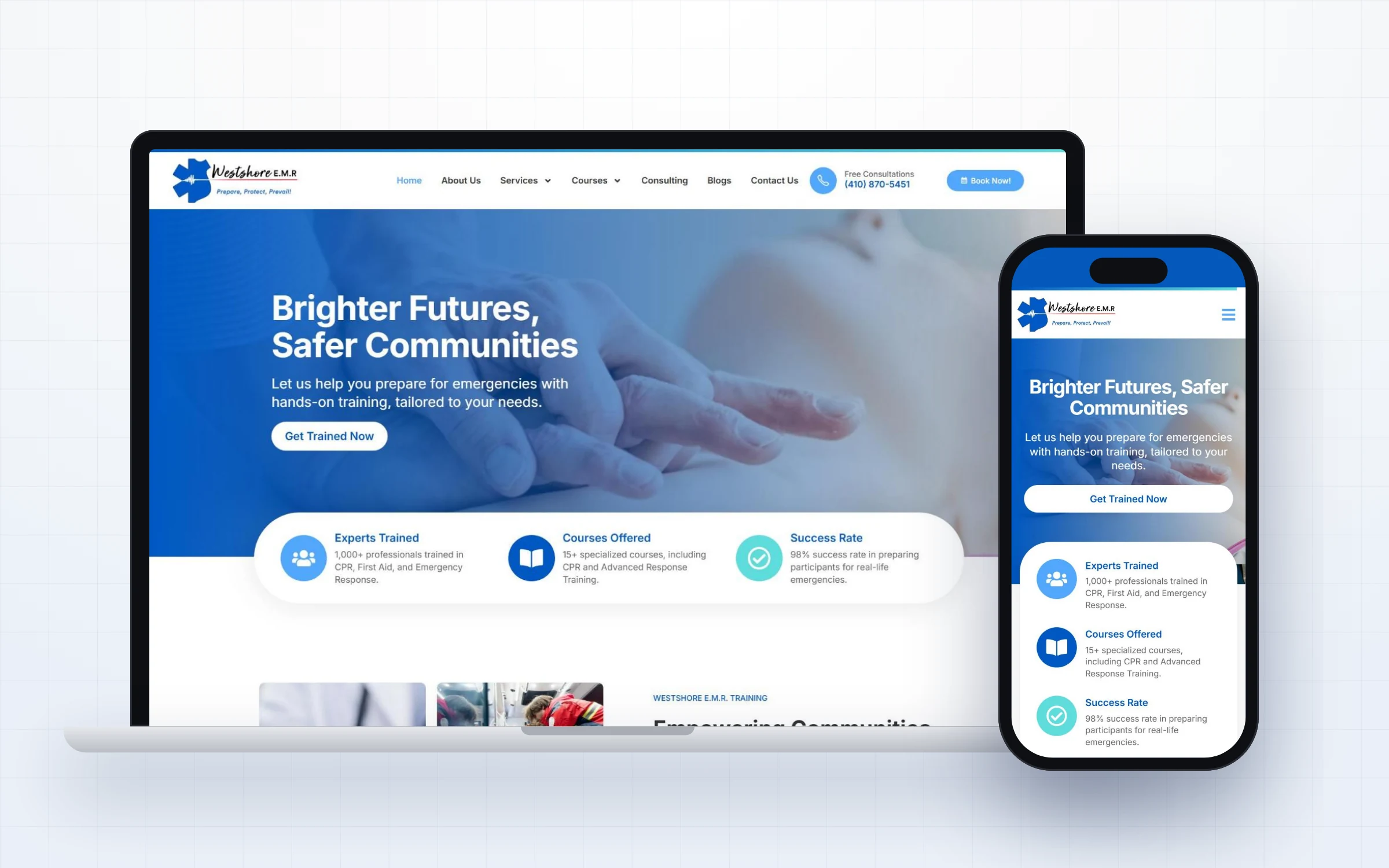
When we planned the Westshore E.M.R. site, the brief was simple: help every visitor find the right course and book it without friction. Here’s what that looked like in practice.
- Clear course paths. Separate routes to CPR, first aid, AED and advanced response training, so a visitor picks their course in one click.
- Booking everywhere. A Book Now button and phone number in the header, repeated after each major section. On mobile, the main button is full width and reads “Get Trained Now”.
- Proof right under the headline. A row of proof points sits directly under the hero, followed later by a founder card for Jason Cowger, real testimonials with a visible 5.0 rating, and certifications and partner logos.
- Separate pages for the other services. AED inspections and maintenance, safety equipment and onsite first aid for events each get their own plain language page.
The design used bright blue with soft aqua highlights and rounded cards. Friendly, not clinical. People booking emergency training are often a bit nervous, and a calm site helps.
One more thing most instructors skip: the page for each class should say who it’s for. “BLS for healthcare providers” and “CPR and first aid for teachers and childcare staff” are different searches with different worries. Name them.
How to market a CPR business with local SEO
Local search is where individual students come from. The searches are short and specific: “CPR certification near me”, “BLS class” plus a town, “first aid course” plus a weekday. To show up you need two things working together.
Course pages that match the search. One page per course, with the course name and your area in the title, a short description of what the class covers, how long it takes, who it’s for and what card they get. If you run classes in several towns, read our guide to local SEO for small business before you create a page for every one of them, because thin copies hurt more than they help.
A complete Google Business Profile. This is what appears in the map results. Pick the most specific category, add real photos of your classes and equipment, list each course as a service and keep hours accurate. Then ask every class for reviews. A training company with forty recent reviews mentioning “easy to book” and “great instructor” will beat a bigger competitor with six. Our Google Business Profile optimization guide covers the setup, and how to get Google reviews covers the asking.
On the technical side, the Westshore build included one H1 per page, unique titles and meta descriptions, schema markup, internal links and fast loading with modern image formats. Boring work. It’s also the reason course pages can rank at all.
Sell group and workplace training directly
This is where the real money usually is, and it’s the part most CPR websites ignore.
The Red Cross lists likely clients for training providers: hospitals, medical and dental practices, schools, childcare centers, care companies, fitness centers, community centers, senior centers, pools and churches. Every one of those is a group booking. And many will let you train on their premises, which makes you a mobile business without extra rent.
Group buyers need a different page from individuals. Give them:
- A dedicated “Workplace and group training” page that explains onsite classes, group sizes and scheduling.
- A short quote form that asks for headcount, location and preferred dates.
- Logos or names of organizations you’ve trained, with permission.
- A phone number answered by a person, because group buyers often want to talk before they commit.
Then go to them. A short email to local school nurses before the semester, or to HR managers at mid sized employers, pointing to that page, does more than a month of social posts. If you’re on LinkedIn, the same page is the link you share. Westshore’s site was designed as a credible destination for exactly that: LinkedIn posts, speaking events and referrals all point back to it.
Use email to bring students back
Here’s the cheapest marketing a CPR instructor can do, and almost nobody does it well. Capture the email of every student. Send a reminder 60 to 90 days before their card expires. Include a link straight to the matching renewal class.
That’s it. No newsletter needed, though a short seasonal note before summer pool season or back to school won’t hurt. Segment by course so a BLS student gets BLS renewals, not pediatric first aid. And get consent when you collect the email, so reminders are welcome rather than spam.
If you’ve never set this up, our guide to email marketing for small business keeps it simple.
How to market a CPR business: a simple plan
If you’re starting from zero, do these in order. Each step builds on the one before.
- 01
Pick your two main audiences
For example, healthcare workers needing BLS and employers needing staff trained. Your pages and messages follow from this choice.
- 02
Build one page per course
Include who it is for, length, card issued, upcoming dates and a Book Now button. Add a separate page for group and workplace training.
- 03
Set up your Google Business Profile
Choose a specific category, add class photos, list courses as services and start collecting reviews after every class.
- 04
Use your certifying body listing
Red Cross Licensed Training Providers can list classes through the Red Cross Class Posting Service for a fee. Check what your own certifying organization offers.
- 05
Pitch group buyers directly
Email schools, clinics and employers in your area with a link to your group training page, timed before their busy seasons.
- 06
Send renewal reminders
Email past students before their certification expires with a direct link to the right renewal class.
What about ads and social media?
Google Ads can fill a class fast when you have a date to sell and empty seats. Keep it tight: course name plus town keywords, sent to the specific course page, never the homepage. Our post on Google Ads mistakes covers the usual budget leaks.
Social media is fine for trust. Photos of a full class, a short clip of a manikin drill, a thank you to a school you trained. Just don’t expect it to be your main booking channel. People with a deadline search; they don’t scroll.
Frequently asked questions
What is the best way to market a CPR business?
Combine a booking focused website with one page per course, local SEO and a complete Google Business Profile for individual students, plus direct outreach to schools and employers for group training. Then send renewal reminders before certifications expire.
How do I get more CPR students?
Make booking take under a minute, rank course pages for course plus city searches, collect reviews after every class and email past students before their cards expire. Group contracts with local employers and schools add students in batches.
Do CPR instructors need a website?
Yes. Even if most bookings come by phone, people check the website to compare courses, confirm credentials and read reviews before they call. It is also where group buyers go after you email them.
How often do people need to renew CPR certification?
According to the American Red Cross, certifications like CPR/AED and First Aid last two years. Check the rules for the specific course and certifying organization you teach.
Should a CPR training business run Google Ads?
Ads work best when you have specific class dates with open seats. Target course and town keywords and send clicks to the matching course page. Local SEO and reviews should still be the long term base.
What pages should a CPR training website have?
A homepage with clear course paths, one page per course, a group and workplace training page, an about page with instructor credentials, a reviews section and a contact or booking page. Add pages for AED sales or inspections if you offer them.
Make booking the easiest part of the decision
Your students are already motivated. They have a deadline and they need a card. The job of your marketing is to make you the obvious, credible, easy choice when they search, and to remember them when the two years are up.
If you want a site built around that, see our website design and local SEO for local businesses, or contact us for a free homepage concept for your training business.