Quick answer: To start a security consulting business, pick one buyer you understand (schools, churches, corporate HR, attorneys), form an LLC with liability insurance, line up the credentials that buyer checks, and package two or three clear services. Your first clients almost always come from people who already know your work, so tell them, then make it easy for strangers to check you out online.
Most guides to starting a security consulting business stop at “make a business plan and build a brand.” That part is easy. The hard part is the first five clients, because security buyers are careful people whose job is to avoid hiring the wrong person.
We build websites and LinkedIn profiles for security, threat assessment and school safety consultants at Design Fly 24, and we watch how their buyers decide. This guide is the version we wish every new consultant had read before launching.
Key takeaways
- Choose a buyer first. “Security consulting” is too wide to market; “workplace violence assessments for HR teams” is not.
- Your first clients come from your existing network and from referral partners such as attorneys, insurance brokers and architects.
- Public bids (RFPs) are a real channel for school and municipal work, and a one page capability statement wins you points.
- Before anyone calls, they check your website and LinkedIn. Those two pages need to show your background in seconds.
Step 1: Pick the buyer before you pick the business name
New consultants love the word “comprehensive.” Physical security, executive protection, school safety, cyber, training, expert witness work. All of it, on one homepage.
The problem is that nobody searches for “comprehensive security consulting.” A district safety director searches for a school safety assessment. An HR director, after a scary incident at the office, searches for workplace violence prevention training. An attorney looks for a security expert witness. Each one wants to land on a page that speaks to exactly their situation.
So start with the buyer you understand best, usually the world you came from. A former school resource officer already speaks the language of superintendents. A retired federal agent knows how corporate security directors think. Write that buyer down in one sentence, and let it shape your name, your services and your first website page.
You can add a second audience later. Stacey D. Porter, a former Homeland Security leader with more than 20 years of federal experience, founded Porter Global Security in 2018 and today serves businesses, houses of worship, schools and attorneys. But each of those audiences has its own clear path on his site, which is what we rebuilt in his security consultant website redesign.
Step 2: Set up the business the way buyers expect
Buyers rarely ask about your business structure in the first call. Procurement teams do, later, and a missing document can quietly knock you out of a bid. Get these in place early:
- A legal entity. Most solo consultants start with an LLC. It keeps your personal assets separate and gives you a clean name for contracts and invoices.
- Insurance. General liability plus professional liability (often called errors and omissions) is what schools, cities and corporate clients usually ask for. Ask a broker who works with consultants.
- Licensing, if your state requires it. Some states regulate security consulting or overlap it with private investigation or security guard licensing. Check your state licensing board before you advertise.
- A W9, a business bank account and a simple contract template. Boring, but they make you look established on day one.
Step 3: Line up the credentials your buyer checks
Security buyers look for reasons to trust you, and they look fast. Years of service, the agency or organization you served, certifications and published work do most of the persuading before you ever speak.
For many consultants, the ASIS International board certifications are the recognised standard: the CPP (Certified Protection Professional) for security management and the PSP (Physical Security Professional) for assessments and physical systems. Membership in a professional association such as ASIS or the International Association of Professional Security Consultants (IAPSC) also helps, and IAPSC is built around independent consultants who don’t sell products.
That independence matters more than people think. A school board wants to know your recommendations aren’t a sales pitch for cameras. If you are independent, say so plainly on your website.
How do security consultants get their first clients?
In our experience, the first clients come from five places, roughly in this order. Notice that “Google” is not first. Search brings steady work later, once people already know your name.
- 01
Tell your existing network, one by one
Former colleagues, supervisors, school administrators and HR leaders you worked with are your warmest leads. Send a personal note explaining what you now offer and who it is for. A post on LinkedIn helps, but a direct message gets the reply.
- 02
Build referral partners
Attorneys, insurance brokers, architects, HR consultants and facility managers all meet clients who need a security consultant. Offer them something useful, such as a short briefing for their clients, and they will think of you first.
- 03
Bid on public work
School districts, colleges, cities and counties post requests for proposals for security assessments and training on their procurement pages. Register on your state and local bid portals and keep a capability statement ready.
- 04
Speak and write where your buyers gather
State school safety conferences, HR association chapters, church security networks and trade publications. One talk in front of 80 decision makers can do more than a year of cold email.
- 05
Make it easy to check you out online
Every referral and every bid ends with someone opening your website and LinkedIn. If those two pages are thin, you lose work you never knew you were in the running for.
Step 4: Package services a buyer can say yes to
“Contact me for a consultation” is not a service. Buyers want to know what they get, roughly how long it takes and what they receive at the end. Two or three clear packages work better than ten vague ones.
A common starting set looks like this:
- An assessment of a site, campus or organization, ending in a written report with prioritized recommendations.
- Training for staff, such as workplace violence prevention or emergency response, with a clear outline, audience and format.
- Ongoing advisory for clients who want a trusted person on call after the assessment.
- Expert witness work, if you have the background, presented on its own page for attorneys.
Write each package so a buyer can forward it to their board or committee without rewriting it. That forwardable page is quietly one of the best sales tools you will ever have.
Step 5: Build a website that passes the board review
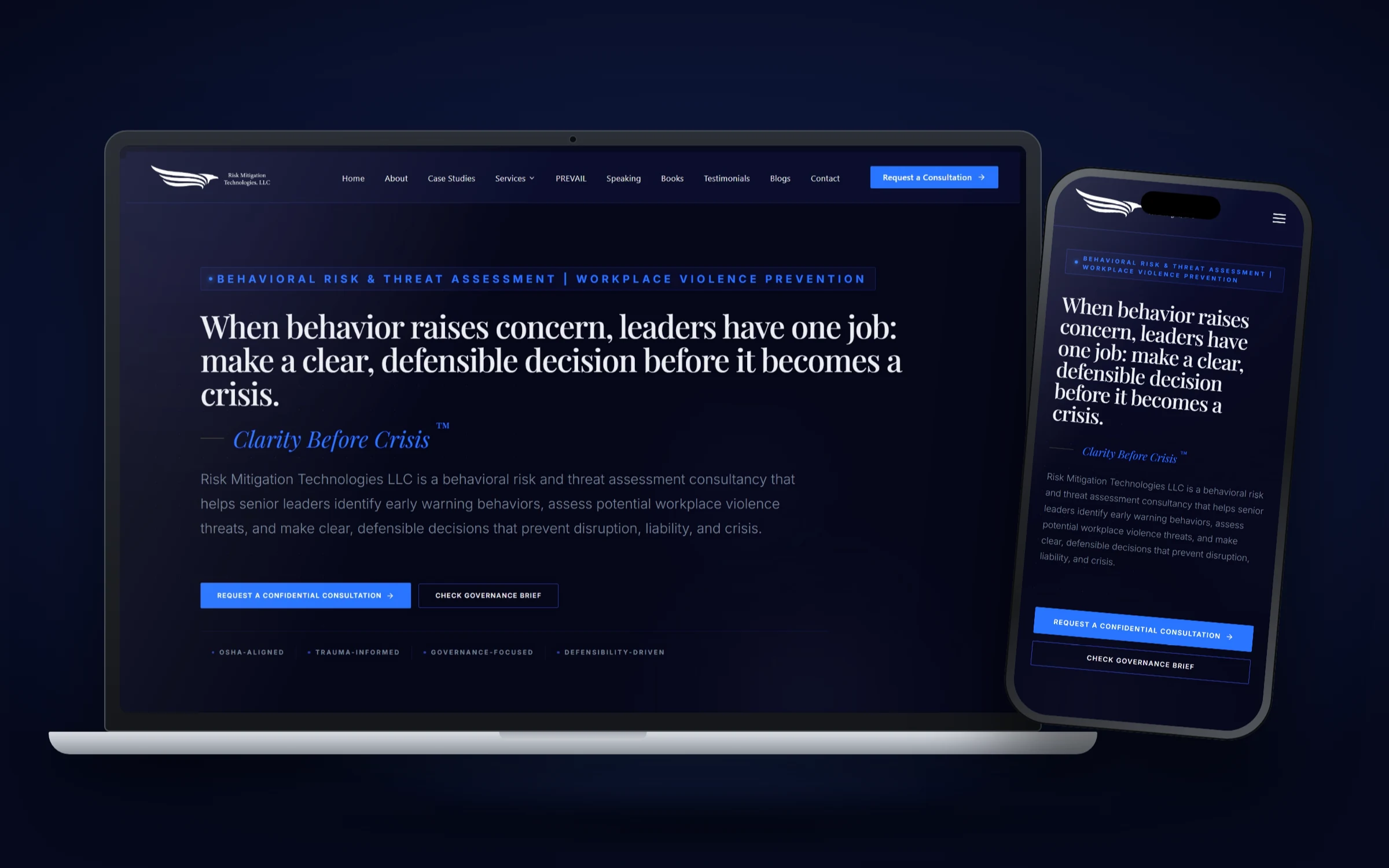
Picture a safety coordinator with three names from a state association list. Before she calls anyone, she opens each website and asks one question: would I be comfortable putting this person in front of my board? The site that makes the answer easy gets the first call.
For a new security consulting business, that means:
- Your background and credentials on the first screen, not buried on an about page.
- One page per service package, written for the buyer who needs it.
- Real photos of you, not stock images of padlocks and cameras.
- A procurement friendly page with your legal name, service area and capability statement.
- One obvious, low pressure way to book a confidential conversation.
We go deeper on this in our guide to the 10 things every security consultant website needs, and you can see the full approach on our page about website design for security consultants.
Step 6: Treat LinkedIn as your second homepage
Almost every buyer who gets your name checks LinkedIn within minutes. A blank banner and a headline that just says “Owner” waste that moment.
Use the banner to state who you help and with what, write a headline with the words buyers search, and add your best talk, article or service page to the Featured section. Our LinkedIn branding work for Jackson Chambers Security Consulting shows what that looks like in practice, and our LinkedIn profile tips for consultants cover the rest.
Mistakes we see new security consultants make
- Trying to serve everyone. A homepage that lists twelve services convinces nobody. Lead with one buyer and one outcome.
- Hiding the best proof. Federal service, published work and media commentary belong at the top, not in a PDF CV.
- Showing too much. Discretion is part of the job. Describe clients by type and region, and never show sensitive details about a facility.
- Waiting for Google. Search is a slow, steady channel. Your network, referral partners and public bids pay the bills in year one.
Frequently asked questions
How do I start a security consulting business with no clients?
Start with the people who already know your work: former colleagues, supervisors and organizations you served. Offer a clear first service, such as an assessment with a written report, and ask for referrals once you deliver it.
Do I need a license to be a security consultant?
It depends on your state. Some states regulate security consulting or treat parts of it as private investigation or security guard work. Check your state licensing board before you advertise your services.
What certifications help a new security consultant?
Many buyers recognise the ASIS International board certifications, such as the CPP for security management and the PSP for physical security assessments. Membership in ASIS or IAPSC also signals that you take the profession seriously.
Where do security consultants find RFPs?
School districts, colleges, cities and counties post requests for proposals on their own procurement pages and on state and local bid portals. Register on those portals and keep a short capability statement ready to attach.
Do I need a website before I get my first client?
You need a credible one, even if it is small. Referrals and bid reviewers almost always check your website and LinkedIn before they call, so a clear page with your background and services helps you win work you might otherwise lose quietly.
Should a security consultant stay independent from product sales?
If you can, yes, and say so. Buyers trust recommendations that are not tied to selling equipment, and professional groups such as IAPSC are built around that independence.
Ready to look as established as your experience?
Your buyers are careful, and they should be. When your website and LinkedIn show your background, your services and a simple next step, every referral and every bid works harder for you.
We design websites and LinkedIn profiles for security, threat assessment and school safety consultants, and we design your new homepage first, free, so you can see it before you pay anything. See our website design for security consultants, read the Risk Mitigation Technologies case study, or book a free call.