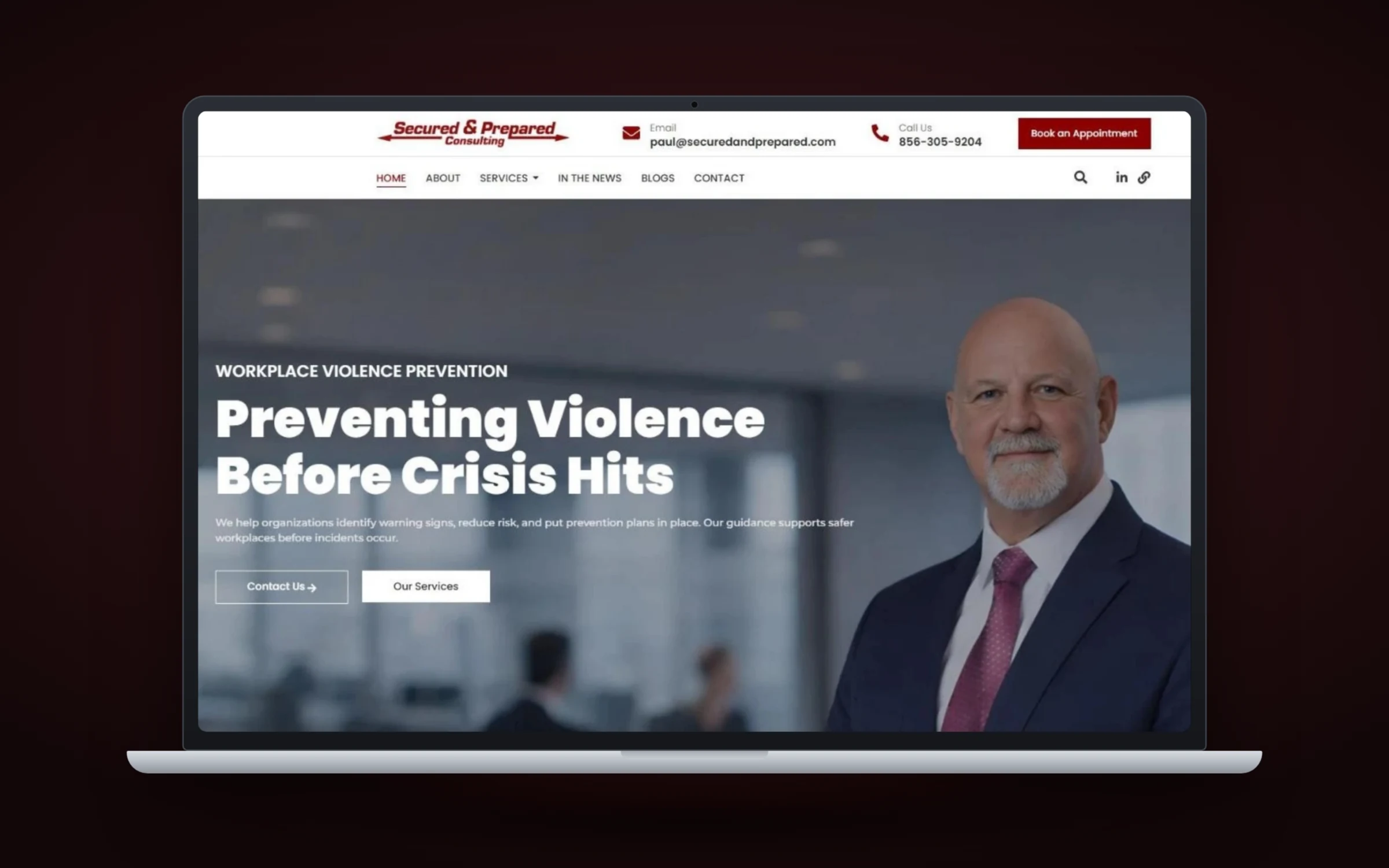
Quick answer: To become an expert witness, pick a narrow area where your experience is hard to argue with, learn how Rule 702 and Daubert judge expert opinions, get practical testimony training, build a litigation CV, set a written fee schedule, and make yourself easy for attorneys to find and check through referrals, directories, LinkedIn and your website.
Most people who search how to become an expert witness already have the expertise. A retired federal security manager. An HR executive with thirty years of terminations, investigations and policy work behind her. A surgeon, an engineer, a forensic accountant. What they don’t have is a map from “I know this field cold” to “an attorney just sent me a retention letter.”
That’s what this guide covers. I run Design Fly 24, a small New York agency, and a good share of our clients are expert witnesses or consultants who also testify. We build the websites and LinkedIn profiles attorneys look at before they pick up the phone, so I’ve had a front row seat to how experts get found and how they lose the call. I’m not a lawyer, and nothing here is legal advice. Where I quote the rules, I link to the text so you can read it yourself.
Key takeaways
- Courts admit expert opinions based on method and reliability, not just your title. Learn Rule 702 before your first case.
- Your litigation CV is evidence. Every date and credential on it will be checked by the other side.
- Most experts bill hourly with separate rates for review, deposition and trial, plus a retainer and travel terms in writing.
- First retentions usually come from attorney referrals. A website and LinkedIn profile turn those referrals into confident calls.
What an expert witness actually does
An expert witness explains something a judge or jury can’t figure out on their own, and gives an opinion about it. A fact witness says what they saw. You say what it means: whether a security plan met the standard of care, whether a termination followed accepted HR practice, whether a device failed because of design or misuse.
Most of the work never reaches a courtroom. You’ll read files, review records, maybe visit a site, talk through the case with the attorney, and write a report. Many cases settle. Some go to deposition, where opposing counsel questions you under oath for hours. A smaller number go to trial.
And there are two kinds of engagement. A testifying expert gets disclosed to the other side and may write a report and testify. A consulting expert helps the legal team behind the scenes and usually stays out of discovery. Plenty of new experts start with consulting roles, which is a fine way to learn how litigation teams think.
The legal basics: Rule 702 and Daubert
You don’t need a law degree. You do need to understand the test your opinions will face, because it shapes how you work from day one.
In federal court, the governing rule is Federal Rule of Evidence 702. It says a witness can be qualified as an expert “by knowledge, skill, experience, training, or education.” Notice that experience is on that list. You don’t need a PhD to testify about how a security guard program should run if you’ve run them for twenty years.
But being qualified isn’t enough. The rule also asks whether your testimony will help the trier of fact, whether it rests on sufficient facts or data, whether it comes from reliable principles and methods, and whether you applied those methods reliably to this case.
That last part got sharper recently. On December 1, 2023, an amendment to Rule 702 took effect. It makes clear that the party offering the expert must show the court it’s “more likely than not” that each requirement is met, and that the opinion must reflect a reliable application of the method to the facts. The Advisory Committee framed it as a clarification rather than new law, but the practical message for you is plain: judges are expected to check your reasoning, not wave it through to the jury.
The idea behind all of this comes from Daubert v. Merrell Dow Pharmaceuticals (1993), which made trial judges gatekeepers for expert testimony. Courts look at things like whether your method can be tested, whether it’s been peer reviewed, its error rate, and whether it’s generally accepted in your field. Kumho Tire (1999) extended that gatekeeping to technical and experience based experts, not only scientists. Some state courts still use the older Frye “general acceptance” test, so ask the retaining attorney which standard applies.
What does this mean day to day? Write down your method. Know which standards, guidelines or published sources support it. Stay inside your lane. The fastest way to get excluded is an opinion that drifts past what your experience and data can carry.
How to become an expert witness: the path to your first case
Here is the order I’d follow if I were starting today with deep expertise and no litigation history.
- 01
Define a narrow niche
Pick the specific questions you can answer better than almost anyone, such as negligent security at houses of worship or wrongful termination in healthcare. Broad claims like "security expert" invite challenges to your qualifications.
- 02
Audit your credentials for gaps
List your degrees, licenses, certifications, publications and teaching. If a current credential, membership or recent publication would close an obvious gap, fix it before you market yourself.
- 03
Get testimony training
Take a course or workshop on report writing, depositions and cross examination, and do at least one mock deposition. Expertise and testimony are different skills.
- 04
Build your litigation CV
Write a dated, factual CV aimed at attorneys, with case types, publications and any testimony history. Details are in the next section.
- 05
Set your fee schedule and agreement
Put your rates for review, deposition, trial and travel in a one page schedule, with a retainer and cancellation terms, before anyone asks.
- 06
Run a conflict check process
Decide how you will screen new matters for conflicts with past employers, clients and parties, and keep a simple log of every inquiry.
- 07
Tell attorneys you exist
Start with lawyers you already know, then add directory listings, a LinkedIn profile that names the work, and a website with a dedicated expert witness page.
- 08
Take the right first case
Choose a matter squarely in your niche, even if it is smaller. Your first deposition transcript will follow you, so make it a clean one.
Expert witness training: what helps and what to skip
Expert witness training comes in a few forms, and they aren’t equally useful.
- Testimony skills courses. Short programs, in person or online, on report writing, deposition tactics and cross examination. This is the training most new experts need first.
- Mock depositions. A trial lawyer grills you on a sample report while someone records it. Watching yourself on video is uncomfortable and worth more than any slide deck.
- Field specific programs. Many professional associations in medicine, engineering, accounting, security and HR run forensic tracks or sessions on testifying within that discipline.
- Mentoring. Ask an experienced expert in your field if you can buy them lunch and hear how their first cases went. Most will tell you more than any course.
Be wary of anything sold as a “certified expert witness” credential that promises work. Courts qualify experts case by case under Rule 702. A certificate from a training company doesn’t do that for you, and listing it too prominently can look like padding in front of a judge.
Your expert witness CV
Your expert witness CV is different from a job resume. It isn’t selling you to an employer. It’s a record that opposing counsel will read line by line, looking for anything that doesn’t match your testimony, your LinkedIn profile or your website.
In federal cases, the rules tell you what attorneys will need. A retained expert’s report under Federal Rule of Civil Procedure 26(a)(2)(B) must include your qualifications, “a list of all publications authored in the previous 10 years,” a list of cases where you testified at trial or by deposition in the previous 4 years, and a statement of your compensation. Build your CV so those pieces are easy to pull.
What to include:
- Name, contact details and a one line description of the questions you address
- Education, licenses and certifications, with dates and current status
- Professional experience, with titles and dates that match LinkedIn exactly
- Areas of expertise phrased as case types (for example, premises security, workplace violence prevention, HR policy and investigations)
- Publications from the last 10 years, then older ones
- Teaching, training delivered and presentations
- Professional memberships
- Testimony history, kept as a separate list you update after every deposition or trial
Put a “last updated” date at the top. And keep a PDF version that matches your website. A lapsed certification listed as current is the kind of small error that turns into a long, unpleasant stretch of a deposition.
Expert witness fees: how experts structure them
Ask ten experts what they charge and you’ll get ten structures. The pieces tend to repeat, though.
| Fee element | How it usually works |
|---|---|
| Case review and report | Hourly rate for reading records, research, site visits, calls with counsel and writing |
| Deposition | Often a higher hourly rate, sometimes with a minimum block of hours |
| Trial testimony | Hourly or daily rate, often the highest in the schedule, including time waiting to testify |
| Retainer | Paid up front before work starts, then applied to invoices or replenished |
| Travel | Travel time at full or reduced rate, plus reimbursed expenses |
| Cancellation | A fee if a deposition or trial date is cancelled late, since you blocked the day |
For a sense of market rates, Expert Institute publishes averages drawn from its own matching data: about $356 per hour for initial case review, $448 for depositions and $478 for trial testimony. It also describes retainers as typically worth about two hours of work. Those are averages across many fields, so treat them as a reference point, not a target. A neurosurgeon and a property manager won’t price alike.
Two rules to know. First, in federal discovery, Rule 26(b)(4)(E) says the party seeking discovery must generally pay the expert a reasonable fee for time spent responding to it, which is why the other side often pays for your deposition time. Second, your compensation is discoverable. Your report must state it, and communications about it aren’t protected. Expect the question “how much are you being paid today?” and answer it plainly.
Never take a fee that depends on the outcome. A fee tied to winning hands opposing counsel an easy attack on your independence, and professional guidance widely treats it as improper. Charge for time, the same whether your opinion helps the client or not.
Conflicts, independence and saying no
Before you accept any matter, run a conflict check. Have you worked for either party? Consulted for a related company? Given an opinion on the other side of the same question last year? Write your answer down, even when it’s “no.”
Independence matters just as much. If you only ever work for plaintiffs or only for defendants, opposing counsel will paint you as a hired gun. Many experienced experts aim for a mix where their field allows it.
And turn down cases outside your niche. A wrong fit doesn’t only risk exclusion. It produces a transcript that the next opposing lawyer can find and quote.
How attorneys find and vet expert witnesses
Attorneys find experts in four main ways, and most retentions involve more than one of them:
- Referrals from other lawyers who’ve used you or seen you testify. This is still the biggest source.
- Expert directories and referral services that list experts by field and location.
- Search, usually a specific phrase like “workplace violence expert witness” plus a state.
- LinkedIn, often to check someone they heard about.
Then they vet. They read your CV, look for publications, search prior testimony and any exclusions, and scan your public footprint for anything that could hurt them on cross. Whatever the path, they nearly always end up on your website and your LinkedIn profile. So those two places need to say clearly what you testify about, and they need to match your CV.
Our post on what attorneys look for on an expert witness website walks through those pages one by one, so I won’t repeat it here. The examples below show how three of our clients present expert witness work.
Porter Global Security: a dedicated page for attorneys
Stacey D. Porter spent more than 20 years with the Department of Homeland Security and founded Porter Global Security in 2018. His practice covers security assessments for businesses, houses of worship and schools, plus security expert witness services. When we redesigned his site, expert witness work got its own page built for attorneys rather than a line buried in a services list, while his federal background and clearance moved onto the first screen. The full story is in the Porter Global Security website redesign case study.
HR Expert Consultants: two audiences, two clear paths
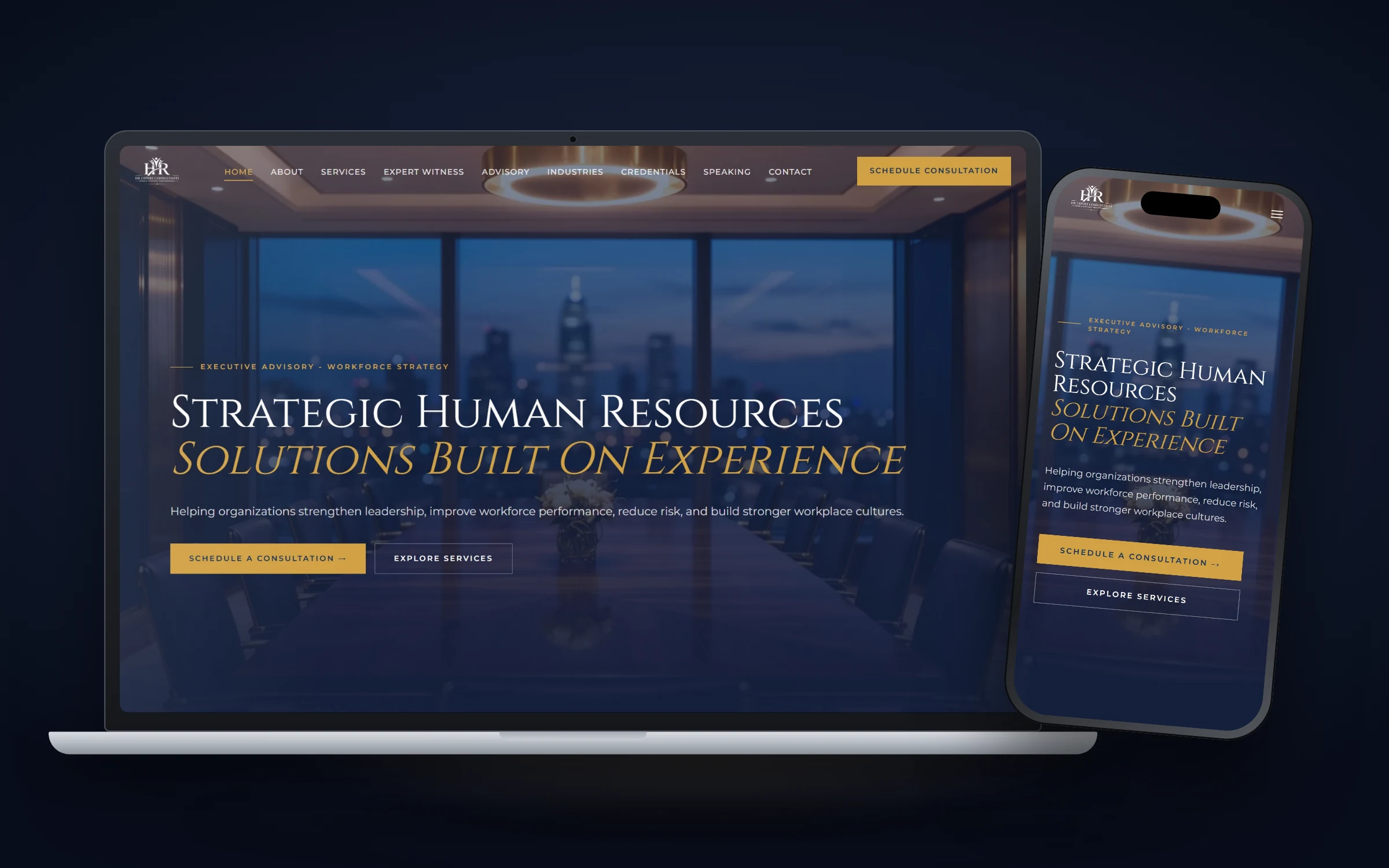
David Morris has more than three decades of HR leadership and is retained as an expert witness in HR and employment matters. His site serves executives looking for advice and attorneys looking for an expert. The expert witness page lays out practice areas, credentials and retention steps so counsel can judge fit quickly. See the HR consultant website design case study for how the two paths are split.
Secured and Prepared Consulting: the LinkedIn first impression
This workplace violence prevention firm’s audience includes attorneys who check LinkedIn before retaining an expert. The banner names four roles (Expert Witness, Consultant, Speaker and Author) and adds an “As Seen On” strip of national media, so the credibility shows in seconds. Here’s the expert witness LinkedIn branding case study.
Frequently asked questions
Do I need a certification to become an expert witness?
No. Courts decide whether you qualify case by case, based on your knowledge, skill, experience, training or education under Rule 702. Training helps you testify well, but no single certificate makes you an expert in the eyes of a court.
How long does it take to get your first expert witness case?
It varies widely. Experts with strong attorney networks sometimes get a call within weeks. Others take a year or more of steady visibility through referrals, directories, LinkedIn and a clear website before the first retention.
How much do expert witnesses make?
Most bill hourly, with separate rates for review, deposition and trial. Expert Institute publishes average rates from its own data, but pay depends heavily on your field, your credentials and how often you testify.
Can I be an expert witness without a degree?
Yes, in many fields. Rule 702 lists experience as a valid basis. A security director with decades of hands on work can qualify, as long as the opinion rests on a reliable method applied to the facts.
Should I put my fees on my website?
Most experts don't publish rates. A line saying a fee schedule is available on request works better, since rates depend on the matter.
What is the difference between a consulting expert and a testifying expert?
A testifying expert is disclosed to the other side and may write a report and testify. A consulting expert advises the legal team privately and is generally shielded from discovery.
Start building the reputation attorneys check
Becoming an expert witness is mostly patient work. Narrow your niche, learn the standard your opinions must meet, train for the deposition, and keep a CV you’d be happy to defend line by line. The first case is the hardest one to land. After that, transcripts, referrals and a growing track record start doing some of the selling.
When you’re ready to be found, see how we approach website design for expert witnesses, or get in touch and we’ll sketch a free homepage concept before you spend anything.