Quick answer: A speaker demo reel is a two to three minute video that shows planners you can hold a room. Open with your strongest stage moment, cut clips to 20 seconds or less, mix in audience reaction and organizer testimonials, and end on applause plus a booking prompt. Put it at the top of your speaker page.
A planner watching your speaker demo reel is usually watching several others in the same sitting. She’ll give you a few seconds before deciding whether to keep going or click the next link. Everything about a good reel comes from respecting that.
We build speaker websites and, since this fall, produce marketing videos for clients, so I spend a lot of time thinking about where a reel sits on a page and how people actually watch it. This guide covers length, structure, where to get footage if you don’t have much, and what to do with the finished video so it actually gets you booked.
Key takeaways
- Two to three minutes for the main reel. Shorter cuts for LinkedIn and email.
- Lead with your single best clip. Planners decide in the first few seconds.
- Real audience reaction and organizer testimonials beat a polished voiceover.
- The reel only works if planners can find it: top of your speaker page, linked from your one sheet and LinkedIn.
What a speaker demo reel has to prove
Planners aren’t watching to learn your life story. Tricia Brouk, who coaches speakers, puts it well in her piece on why most speaker demo reels fail: the reel has to answer whether you can command attention, connect with their audience and deliver real value, and it has to do it almost immediately.
Notice what’s missing from that list. Your credentials. Your book. Your childhood. Those belong on your speaker page and one sheet. The video’s job is narrower: show a stranger what it feels like to be in the audience when you speak.
That’s why reels that open with a slow logo animation and a narrator reading your bio lose people. The first thing on screen should be you, on a stage, saying something worth hearing.
How long should a speaker reel be?
Two to three minutes for the main version. BigSpeak, a speakers bureau, says two to three minutes is all you need, and the National Speakers Association blog suggests a maximum of three minutes, with no single clip running longer than about 20 seconds.
I agree with both, with one addition. Make more than one cut from the same footage:
| Version | Length | Where it goes |
|---|---|---|
| Main demo reel | 2 to 3 minutes, horizontal | Top of your speaker page, YouTube or Vimeo, bureau profiles |
| Short sizzle cut | 30 to 60 seconds, horizontal | Email to planners, homepage hero, conference proposals |
| Vertical cut | 30 seconds or less, 1080 by 1920 | LinkedIn, Instagram, phone viewers |
| Full talk | Full length, private link | Sent on request to serious buyers and bureaus |
The full talk matters more than people think. A committee that’s about to spend real money often wants to see twenty uninterrupted minutes. Keep it unlisted and send it when asked.
A structure that works
There’s no single formula, but most reels that get speakers booked follow a similar shape. Here’s the order I’d start from:
- 01
Open cold with your best moment
Ten to fifteen seconds of you on stage delivering your strongest line. No logo, no title card first.
- 02
Say who you are and who you help
A short on screen line or a quick clip of you stating your topic and audience. One sentence, not a bio.
- 03
Show three or four short talk clips
Each under 20 seconds, each making one point. Vary the stages, rooms and audiences if you can.
- 04
Cut in audience reaction
Laughter, nodding, people writing notes, a room leaning in. This is the proof planners want to see.
- 05
Add organizer testimonials
Short video clips or one line quotes on screen from people who booked you, with names and titles.
- 06
End on applause and a next step
Close with real applause, your name and the address of your speaker page.
Notice there’s no voiceover in that structure. You can use one, but BigSpeak warns that a dull narrator undermines the whole reel, and in my experience most speakers are better served letting their own stage voice carry it.
Where to get speaker reel footage
This is where most people stall. “I don’t have good footage” is the reason half the speakers I talk to don’t have a reel at all.
Some honest options:
- Ask every organizer for the recording. Many events film sessions and never send the files unless asked. Put it in your speaking agreement.
- Bring a friend with a phone. The NSA piece makes the same point: smartphone footage from a peer still shows your stage presence. Use a clip on mic or a small recorder for better sound.
- Use podcasts and webinars sparingly. They prove you can talk, not that you can hold a room. One clip is fine; a reel made only of Zoom footage reads as a beginner reel.
- Speak for free to get footage. A local association, chamber or university talk where you control the filming can be worth more than a paid gig that’s never recorded.
Sound matters more than picture. Viewers forgive a slightly soft image, but they click away from echoey, hard to hear audio within seconds. Add captions too, since plenty of people watch on mute at their desk.
Keynote speaker video mistakes that cost bookings
- Too long. Five minutes of highlights is no longer a highlight reel.
- All talk, no audience. If we never see the room, we can’t judge how the room responded.
- Generic stock footage. City skylines and handshakes add nothing. Use your own events.
- Old footage. If you’ve changed your look or your topic, a 2018 clip confuses people.
- Music louder than you. Background music should support pacing and sit well under your voice.
- No next step. End with where to book you, every time.
Where the speaker demo reel lives on your website
A great reel buried on a “Media” page three clicks deep might as well not exist. On a speaker website, the reel should be the first thing on the speaking page and visible from the homepage without scrolling much.
A few practical rules we follow when building:
- Host on YouTube or Vimeo and embed it. Self hosted video files slow your page, and our guide to website speed optimization explains why that costs you visitors.
- Use a custom thumbnail of you mid talk, not a random frame of you blinking.
- Put two or three written testimonials right beside or below the video.
- Put a booking button directly under the reel. The moment someone finishes watching is the moment they’re most interested.
- Add the reel to your one sheet as a link or QR code, and pin the vertical cut to your LinkedIn Featured section.
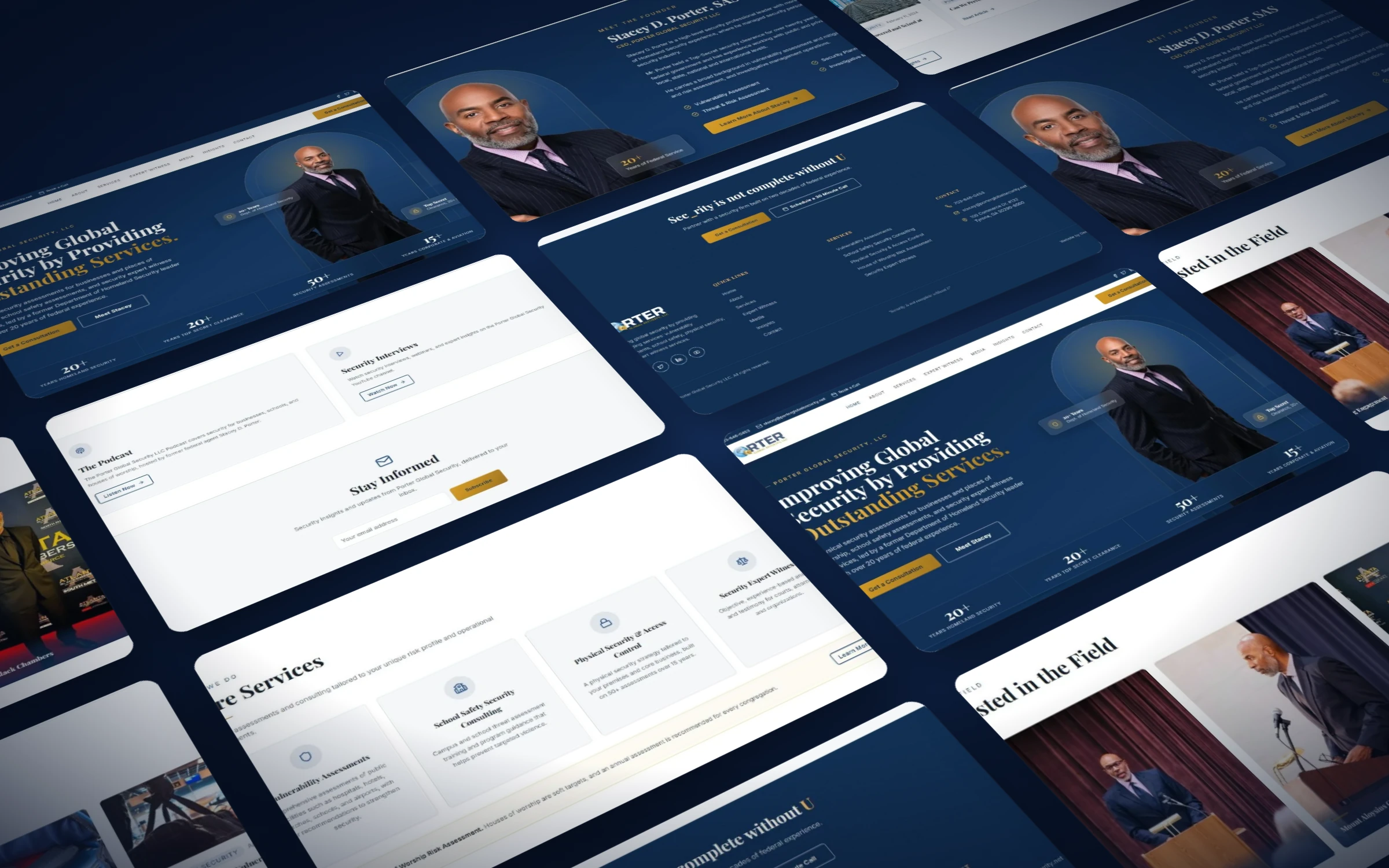
When we redesigned the site for Porter Global Security, Stacey Porter’s speaking photos from Mount Aloysius College and the Atlanta Black Chambers went into a “Trusted in the Field” gallery on the homepage, and his podcast and YouTube interviews moved into a Media section. We also cut a 30 second vertical launch reel at 1080 by 1920 from footage of the live site for LinkedIn and Instagram. That short format is exactly what a vertical speaker clip should look like.
DIY or hire someone?
If you can edit and you have good footage, a first reel is a reasonable DIY project. BigSpeak’s own view is that content matters more than polish, and I’d agree: a planner is persuaded by what you say on stage, not by fancy transitions.
Hire help when your footage is scattered across phones, event files and old DVDs, when you need multiple cuts for different channels, or when the reel has to match a new website and brand. Cost depends on how much footage there is and how many versions you need. That’s a conversation, not a price list.
Frequently asked questions
How long should a speaker demo reel be?
Two to three minutes for the main reel. Make a 30 to 60 second sizzle cut for email and a vertical cut of 30 seconds or less for LinkedIn and Instagram.
What is the difference between a speaker reel and a sizzle reel?
People use the terms loosely. In practice, the demo reel is the full two to three minute version, and a sizzle reel is a shorter, faster cut built to grab attention quickly.
Can I make a speaker reel without professional footage?
Yes. Smartphone footage filmed by a friend, with a decent microphone, still shows your stage presence. Prioritize clear audio and real audience reaction over picture quality.
Should I include testimonials in my demo reel?
Yes. Short video clips or one line quotes from organizers who booked you are some of the most persuasive moments in any reel. Always include names and titles.
Where should I host my speaker reel?
On YouTube or Vimeo, embedded at the top of your speaker page. Self hosting the file slows your site and often plays poorly on phones.
How often should I update my speaker video?
Whenever you have a clearly better clip, change your topic or change your look noticeably. For an active speaker, that usually means once a year or so.
Let the room do the selling
The best speaker demo reel is mostly other people: an audience laughing, a room going quiet, an organizer saying they’d book you again. Your job is to pick the moments and get out of the way.
If you want help turning raw footage into a reel and a speaker page that work together, see the full list of our services or our website design services, then get in touch.