This SEO case study shows how we helped National School Safety and Security Services, the consulting firm of Dr. Kenneth S. Trump, move from page three of Google to page one. Every number in this SEO case study comes straight from the site's own Google Search Console account.
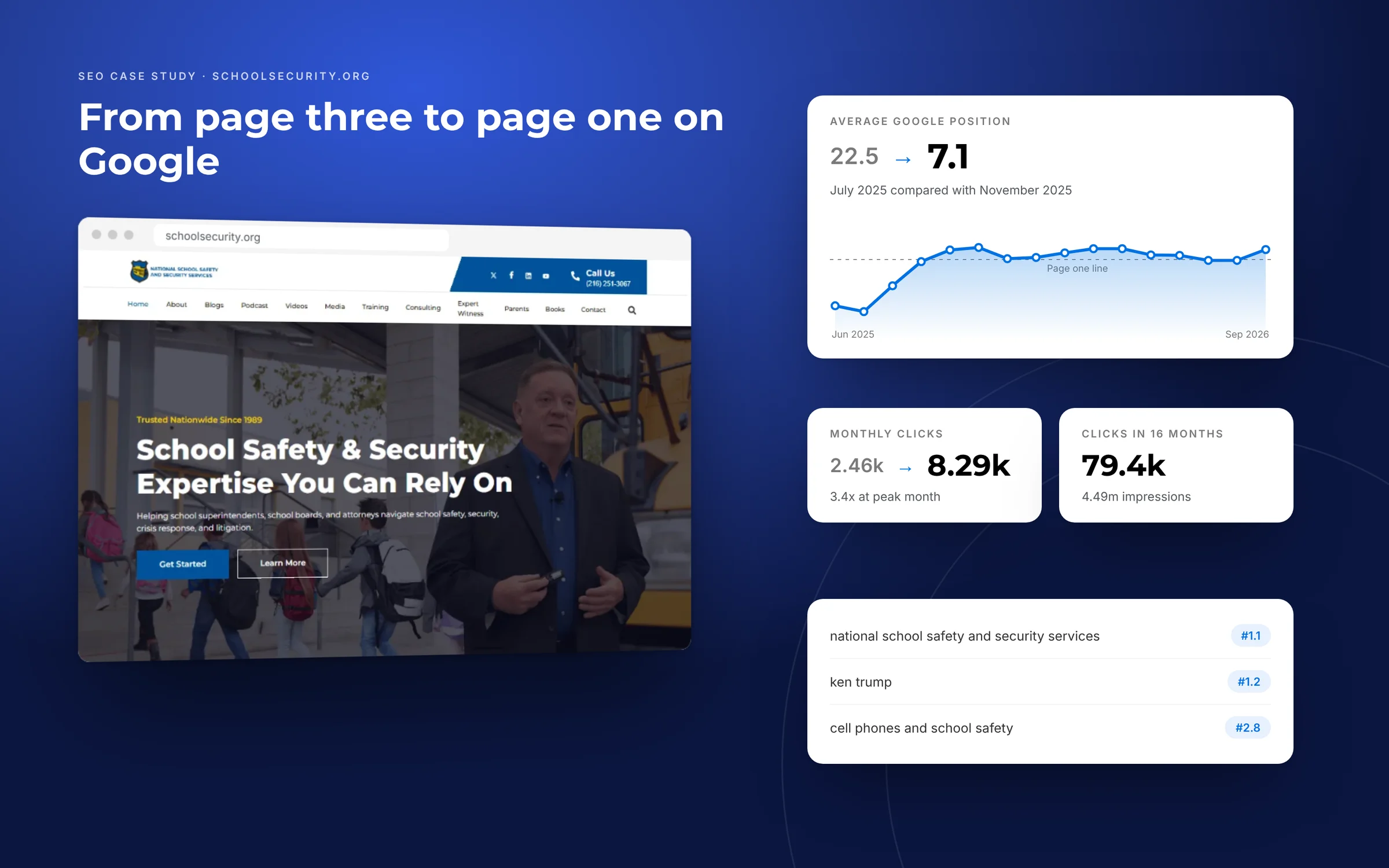
These are the headline results of this SEO case study, taken from Google Search Console. They compare the starting point in July 2025 with the months that followed, and the full 16 month view up to September 2026.
The client behind this SEO case study is Dr. Kenneth S. Trump, one of the best known independent school safety consultants in the United States. Superintendents, school boards, attorneys and reporters rely on his analysis, and his website schoolsecurity.org holds decades of articles, videos and media commentary.
That depth is a real asset for SEO, but only when Google can understand it. When we looked at the data in mid 2025, the site was averaging position 22.5 across all searches, which means most of its pages were sitting on page three of Google, where very few people ever look.
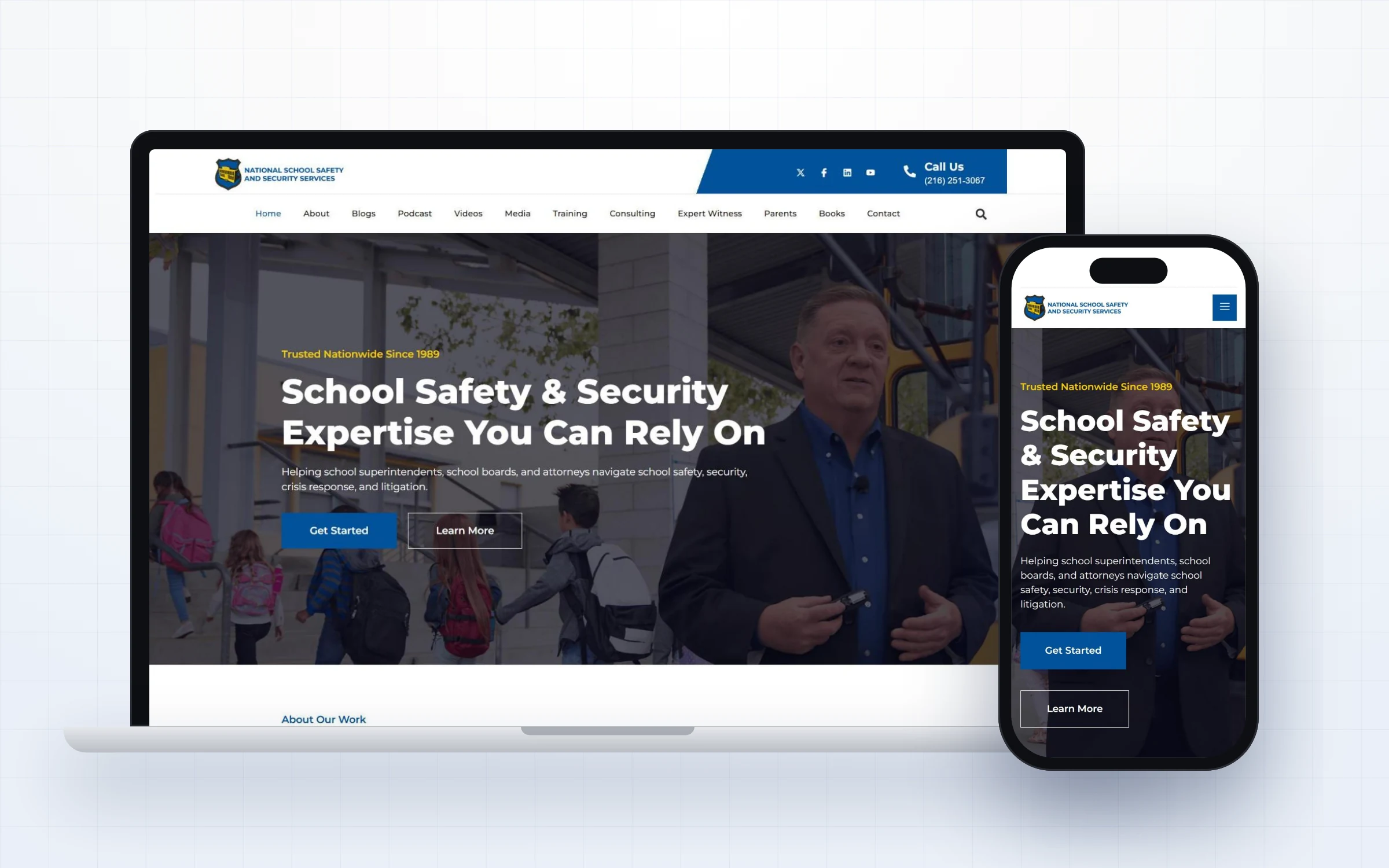
You can read how we designed and structured the site in our school safety consultant website case study. This SEO case study focuses on what happened in search after that.
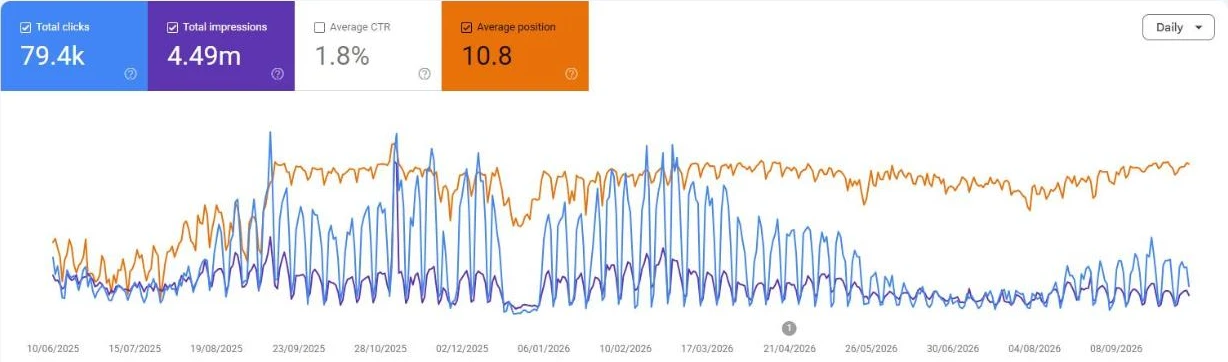
The chart below is the heart of this SEO case study. It uses the real monthly totals from Google Search Console. The line shows the average Google position, where higher on the chart means higher on Google. Notice how quickly the line climbs between July and October 2025, and how it holds near page one from then on.
Swipe the chart to see every month
School traffic is seasonal. Clicks dip every summer and over the winter break, when schools are closed, so the ranking line is the clearest signal of progress.
This screenshot is the source for every figure in this SEO case study. It is the unedited 16 month performance report for schoolsecurity.org. The orange line is average position, and the blue lines are clicks and impressions.
Every SEO case study is really a story about process. There was no single trick. The results came from steady, practical work in the right order, reviewed every month against the data.
One more thing this SEO case study shows: rankings grow faster when the website, the content and the outreach work together. That is why we often pair SEO with a website refresh, LinkedIn branding and email marketing. If you want results like the ones in this SEO case study, we can look at your site and tell you honestly where the quickest wins are.
We connected Google Search Console and Semrush, recorded the starting numbers and listed every technical and content issue holding the site back.
We fixed indexing problems, submitted clean sitemaps, added structured data so Google understands the expert, the organization and the articles, and improved page speed.
We rewrote titles and meta descriptions, tightened headings and improved internal links, starting with the pages that already had impressions but poor positions.
We refreshed and expanded articles on the topics parents, schools and reporters search for most, such as phones in schools and metal detectors in schools.
We audited the backlink profile, cleaned up weak signals and made sure Dr. Trump's media work and credentials were clearly connected to the site.
We moved the site to faster cloud hosting, load tested it before going live and kept a rollback plan ready, so there was no downtime for readers.
Every month we review the data, report what moved and choose the next priorities, which keeps the work focused on results.
June and July 2025. The starting point for this SEO case study. The site averaged position 21 to 22.5, which put most pages on page three of Google, and monthly clicks were between 2,460 and 3,690.
August and September 2025. Technical fixes and the first round of title and content updates went live. Average position improved to 16.3 in August and 10.5 in September, and clicks more than tripled from July to 7,820 in September.
October and November 2025. The site crossed onto page one with an average position of 7.7 and then 7.1, its best month in the whole period.
December 2025 to May 2026. Rankings held between 7.4 and 9.8 through the school year, and March 2026 became the strongest month for clicks at 8,290.
June to September 2026. Clicks followed the usual summer dip, but rankings stayed near page one, and September 2026 closed at an average position of 7.6 as school searches returned. That steady hold is the most encouraging part of this SEO case study, because it shows the gains were lasting rather than a short spike.
To keep this SEO case study fair, we compared the same season one year apart: June and July 2025 against July to September 2026. A lower position number means the site appears higher on Google.
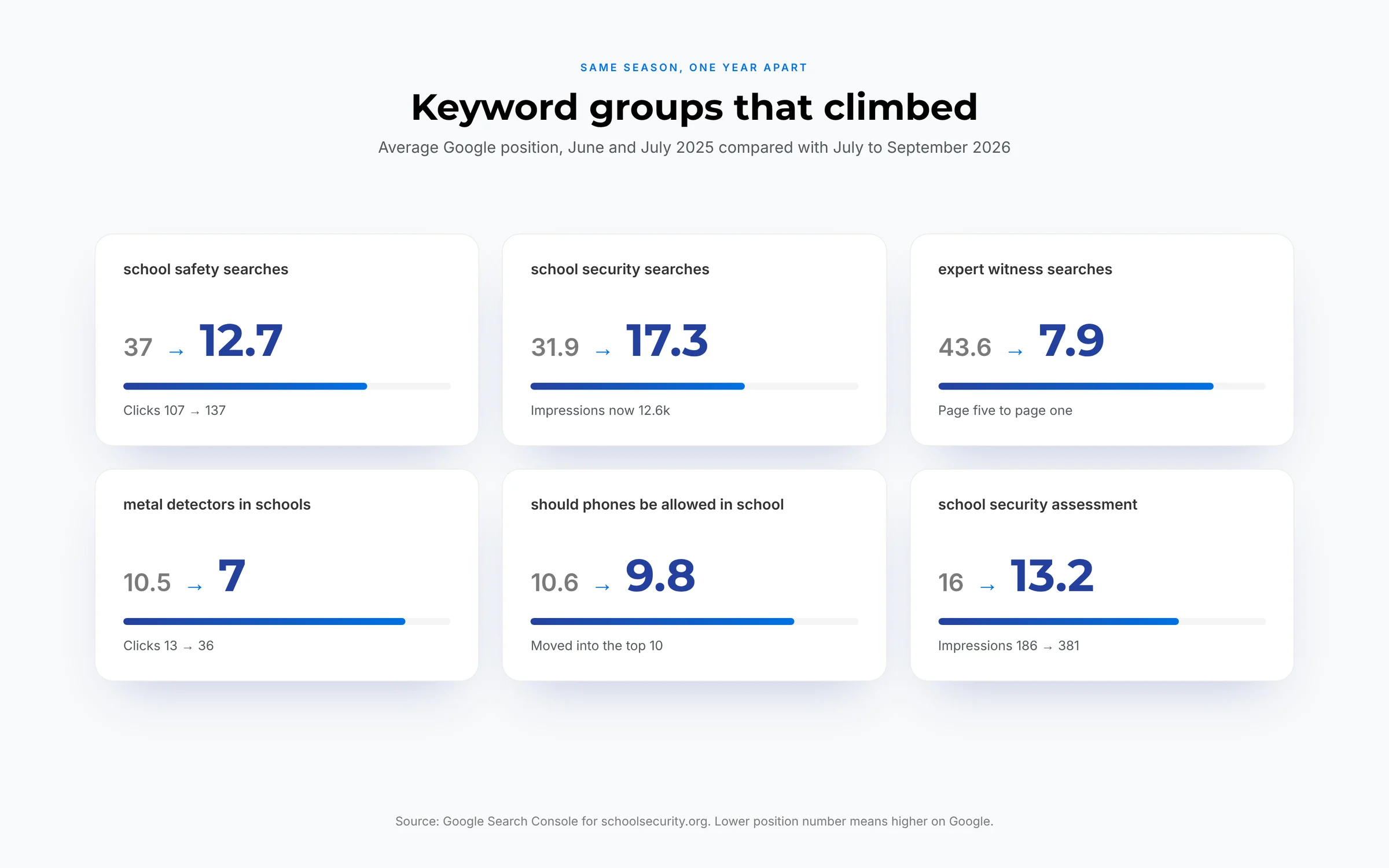
| Keyword group | Position before | Clicks, before and after | Position after |
|---|---|---|---|
| school safety searches | 37 | 107 to 137 | 12.7 |
| school security searches | 31.9 | 37 to 40 | 17.3 |
| expert witness searches | 43.6 | 1 to 1 | 7.9 |
| metal detectors in schools | 10.5 | 13 to 36 | 7.0 |
| should phones be allowed in school | 10.6 | 102 to 79 | 9.8 |
| school security assessment | 16.0 | 0 to 1 | 13.2 |
These are the top searches that sent people to schoolsecurity.org over the last 16 months. In this SEO case study, several sit in the top three, including the firm's own name and Dr. Trump's name.
| Search | Clicks | Impressions | Average position |
|---|---|---|---|
| should phones be allowed in school | 994 | 20,103 | 6.9 |
| 2006 volleyball incident | 985 | 79,760 | 7.3 |
| should cell phones be allowed in school | 661 | 14,605 | 7.8 |
| national school safety and security services | 552 | 1,025 | 1.1 |
| metal detectors in schools | 262 | 7,329 | 5.2 |
| cell phones and school safety | 234 | 433 | 2.8 |
| ken trump | 196 | 1,940 | 1.2 |
| kenneth trump | 126 | 1,710 | 1.5 |
Not every month went up. Clicks in summer 2026 were lower than in summer 2025, even though rankings were much stronger. Two things explain most of that: school traffic always drops in the summer, and Google now answers more questions directly with AI summaries, which reduces clicks across the whole web.
That is exactly why we watch rankings as closely as clicks. A site that holds page one positions is ready to capture traffic when demand returns, and September 2026 already shows clicks rising again with an average position of 7.6.
A good SEO case study should show the dips as well as the peaks. We would rather show you real data with context than a cherry picked chart. It is the same honesty our clients get in every monthly report.
Start with pages Google already shows. Pages with lots of impressions and weak positions are the fastest wins, because Google already sees them as relevant.
Fix the foundation first. Clean indexing, structured data and fast hosting make every piece of content work harder.
Answer the questions your audience really asks. The biggest traffic drivers here are practical questions from parents and schools, not industry jargon.
Measure every month. As this SEO case study shows, a simple monthly review keeps the work focused and shows clearly what is paying off.
This SEO case study is written for consultants, trainers, speakers and expert witnesses who already have real expertise but are not getting found on Google. If your website has years of articles, media interviews and service pages, yet most of your new work still comes from referrals alone, the situation will feel familiar.
It is also useful for marketing managers at small firms who need to explain SEO to a founder or a board. The charts and tables use plain numbers from Google Search Console, so you can see what changed without needing to understand every technical detail.
Finally, it is for anyone who has been burned by vague SEO reports in the past. Everything here is measurable, and every claim can be checked against the data.
We judge every SEO project on four numbers from Google Search Console: clicks, impressions, average position and click through rate. Clicks show real visitors, impressions show how often Google offers your pages, and position shows how high you appear.
Average position is especially useful for seasonal businesses like school safety. Traffic naturally rises and falls with the school year, but the position tells you whether Google trusts the site more or less over time. In this SEO case study, the position moved from 22.5 to 7.1 and then held close to page one for a full year.
We also track the searches that matter most for the business, such as expert witness and school security assessment searches. Those are the queries that bring in consulting enquiries, so they get extra attention in every monthly review.
Google now shows AI summaries for many questions, and tools like ChatGPT and Perplexity answer questions directly. That changes how people find experts, but it makes strong SEO more important, not less.
AI tools pull their answers from pages that search engines already trust. Clear structure, structured data, named experts and well organized articles all make it more likely that your site is the source those tools quote. The same work that moved schoolsecurity.org up Google also prepares it for AI answers.
That is why our SEO work focuses on clarity and authority rather than tricks. A site that clearly explains who the expert is, what they know and why they can be trusted will keep earning visibility as search continues to change.
Every project under our SEO services starts with a free review of your Search Console data. We show you where you stand today, which pages are closest to page one and what we would fix first. There is no obligation, and you keep the findings either way.
If we work together, you get a clear monthly plan, hands on implementation and a simple report that shows what moved. You will always know what we are working on and why it matters for your business.
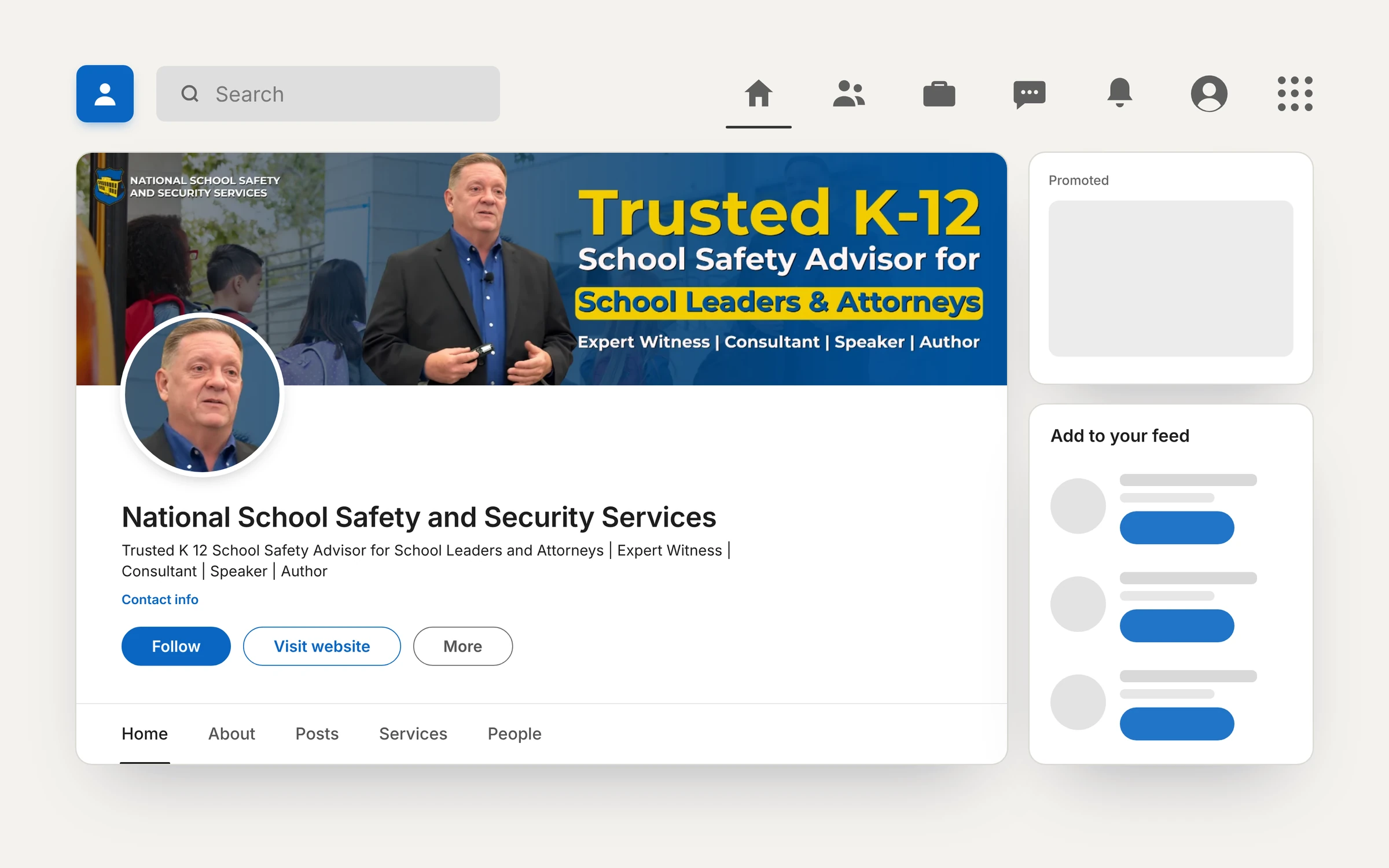
Many of our SEO clients also use our website design and LinkedIn profile services, so their whole online presence tells the same story. You can see those projects in our other case studies, including the website and LinkedIn work for this same client.
Every number comes from the Google Search Console account for schoolsecurity.org, which records real clicks, impressions and positions from Google search.
Rankings started to move within the first month, and the average position reached page one within about four months.
It is the average spot where the site appears in Google results across all searches. Position 1 to 10 is page one, 11 to 20 is page two and so on.
School related searches fall during summer and winter breaks, and AI summaries in Google now answer some questions without a click. Rankings stayed strong through those dips.
Yes. We can build an SEO case study like this one for your business too. We work with consultants, trainers and expert witnesses, and we start every project with a free review of your current search data.
Yes. We designed and manage the schoolsecurity.org website as well, so design and SEO work together from the start.
Yes. If your current site is slow, outdated or hard to rank, we can combine SEO with website design or website development so the new site is built to rank from day one. Many clients also add Google Ads management for faster leads and LinkedIn branding so buyers who look you up see the same strong brand.
Your business could be our next SEO case study. Send us your website and we will review your Search Console data, show you the quickest wins and explain what we would do first.